
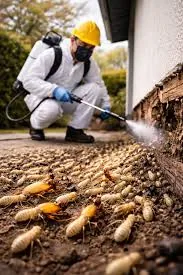

TERMITE CONTROL • CINCINNATI, OHIO

Protect the wood your home depends on.

Practical termite inspection, treatment planning, exclusion, and ongoing maintenance for Cincinnati properties.

Termites work quietly behind walls, beneath floors, and along foundation edges. In and around Cincinnati, moisture near the structure, wood-to-soil contact, and hidden entry points can create favorable conditions for subterranean termites. A few visible wings or an earthen tube may be the first clue, but a careful inspection is what helps separate an active concern from old evidence.

Start with a conversation

Tell us what you’re seeing.

A smarter way to start

Inspect the conditions.
Choose the next step.

We focus on activity, access, and the repair or maintenance details that matter at your property.

01

Find the activity before it spreads

A termite visit starts with a methodical look at accessible foundation lines, crawl spaces, basements, sill plates, joists, utility penetrations, porches, steps, and other wood-to-ground transitions. The inspection looks for mud tubes, shed wings, hollow-sounding or tunneled wood, moisture conditions, and places where termites can move unseen. Findings are documented in plain language so the next step is based on what is actually present.

02

Treatment components that fit the structure

Depending on the inspection, a plan may include soil-applied treatment, bait stations or monitors, targeted wood treatment, or a combination of methods. Installation is not limited to a chemical application: it can also mean placing monitoring components, adding physical exclusion materials, and sealing practical pathways around cracks, joints, and service penetrations. The selected approach should account for the building, access, drainage, and treatment history.

03

Repairs and exclusion at vulnerable points

Termite control works best when the structure is less welcoming. Replace or isolate badly damaged wood when appropriate, keep structural wood separated from soil, and address gaps where utility lines or slabs meet the foundation. Seals, screens, and other exclusion materials can help close routes, while repairs to leaks, downspouts, grading, or blocked ventilation reduce the damp conditions subterranean termites need.

04

A maintenance plan for changing seasons

A treatment is one step in a longer prevention routine. Keep firewood, mulch, stumps, and wood debris away from the home; keep gutters and downspouts moving water away; and avoid dense plant growth against exposed wood. Periodic checks are especially useful after wet weather, remodeling, drainage changes, or a spring swarm. Do not disturb installed monitors or treated areas before reviewing the service instructions.

05

A clear Cincinnati service workflow

Start by sharing what you noticed: wings at a window, a narrow mud tube, soft trim, or activity near a crawl space. The inspection then maps conditions and visible evidence, followed by an explanation of suitable treatment and exclusion steps. After service components are installed or repairs are identified, follow-up monitoring can help spot renewed activity early and keep prevention tasks on track.

Common questions

Termite Control
answers, clearly.

These concise answers cover common Cincinnati questions. Your property, pest, and timing determine the right next step.

How do I know if I have termites?+

Look for mud tubes, shed wings, hollow or tunneled wood, and swarmers near windows or doors. An inspection is the best way to distinguish active evidence from old damage or ants.

Are termites common in Cincinnati?+

Subterranean termites are a regional concern. Moisture, wood-to-soil contact, and foundation access can increase risk, so local site conditions matter more than a calendar alone.

What should I do if I see termite swarmers?+

Save a few insects or shed wings if possible, avoid disturbing the area, and arrange an inspection. Killing visible swarmers does not address a hidden colony.

How can I prevent termites around my home?+

Keep soil and wood separated, move firewood and debris away, direct water away with working gutters and downspouts, fix leaks, seal openings, and keep inspection areas accessible.

What happens during a termite inspection?+

The service reviews accessible foundation edges, crawl spaces, basements, wood, moisture conditions, entry points, and visible evidence, then explains appropriate treatment, exclusion, repair, and follow-up steps.

Take the next practical step

Make the next step
clear and practical.

If you have seen termite evidence or want to understand risk around your Cincinnati home, contact SureFix Pest Control to arrange a termite control inspection. You will get a focused review of the structure, clear observations, and a practical path for treatment, repair, exclusion, and maintenance—without guesswork.

(283) 209-0361 →