

01
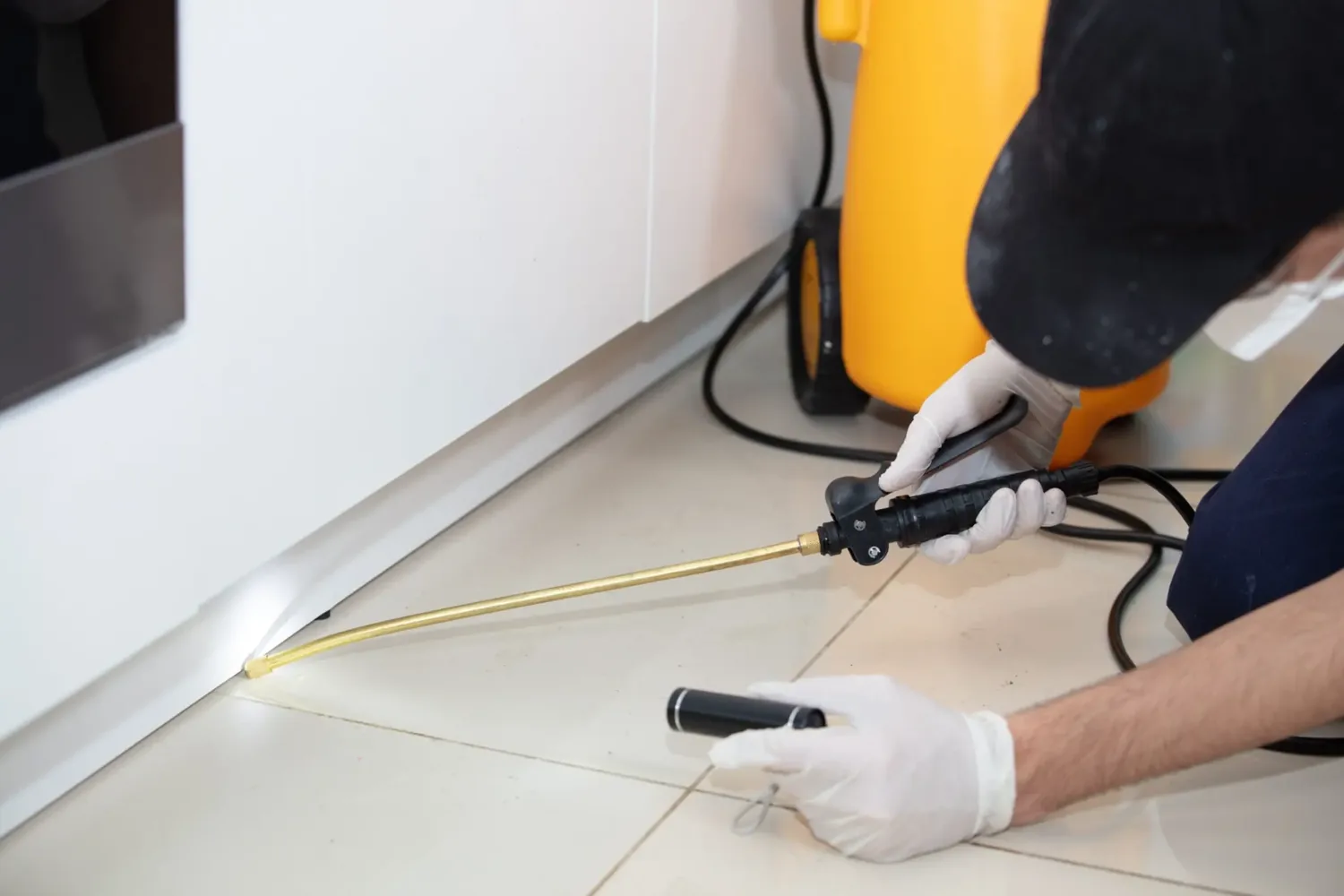
Inspect first, then map the activity
The visit begins with a careful inspection of kitchens, bathrooms, basements, laundry areas, cabinets, wall penetrations, and other likely harborage zones. We look for live or dead insects, droppings, egg cases, moisture, food access, and gaps around pipes, wires, windows, doors, and floor drains. Identifying the likely species and activity pattern helps shape the next step. Your observations matter too.